
BLOG
Book Now For Free

Build a Fighter’s Body Without Losing Speed

It is an iconic picture of a Muay Thai fighter, who is skinny as a whip, and whose muscles are coiled springs that are about to burst. There was a myth that had been held tenaciously against the combat sports world for years: You had to be fast, and to be fast, you had to be skinny. Entering the weight room as most feared would result in being muscle-bound by trading explosive speed for bulky, slow-twitch mass.
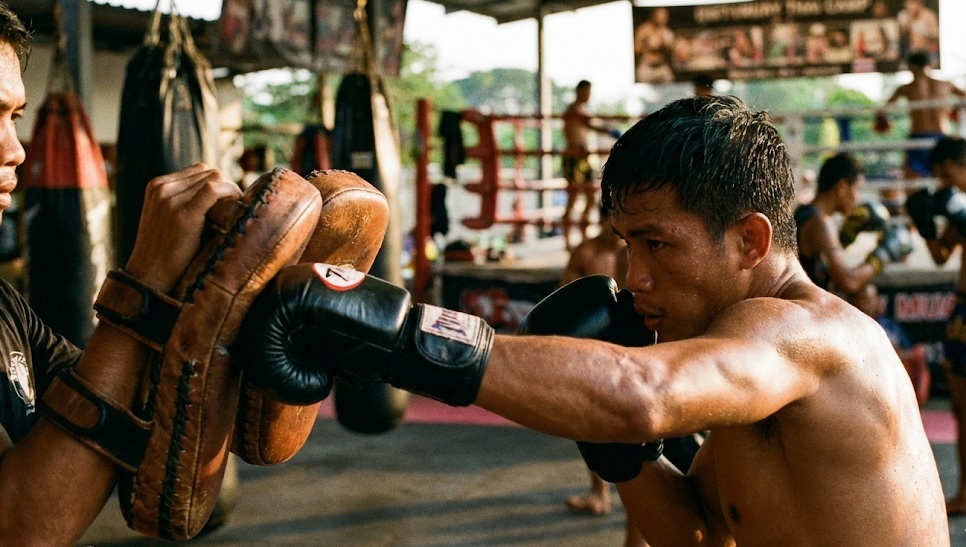
However, the modern Nak Muay is more knowledgeable. Hail the Age of the Hybrid Athlete: the fighter who has the sculptured, strong “physique” body and the lightning quickness to make him dominant on the ring. It is not vanity, but rather functionality.
An athletic body, properly built, is a body of strength, stamina, and toughness. So, what do you do to balance the creating of the camera-ready body and the ferociousness of the speed needed in the art of the eight limbs? Let’s break it down.
Myths Around Bulky and Slow Narrative
To begin with, the elephant in the gym must be mentioned. The myth that weight lifting turns one into a snail is an old concept. When you grow muscle mass that is not efficient anymore because you started taking steroids and began bodybuilding, this is when you will slow down, as one strength coach aptly put it. However, when you train smart on weight lifting… then gaining a little mass is not going to hurt you”.
Your muscles do not understand how heavy a weight you are lifting is; they understand how to move as you command them to move. When you are simply doing some slow and controlled bodybuilding movements, you will grow strong at a slow rate.
But when you train with purpose–with the aim of explosive strength and speed–you build up, in place of slow-twitch muscle fibres, the fast-twitch fibres, the fibres, in other words, which are the actual engines of your roundhouse kicks and crosses. Whether you have to lift or not is not the key, but how.
Creating the Right Foundation
The key training processes to develop a fighting physique include emphasis on the multi-joint motion (compound), which resembles the biomechanics of fighting. These are the exercises that develop life strength, which is directly carried over to the clinch, the kick, and the knockout.
The Deadlift
It is the Governor of the posterior chain building. Good hamstrings with lower back and butt muscles in the back, with a powerful kick, Thrusting force up the ground–the foundation of every strong kick.
The Front Squat
Contrary to the back squat, the front squat exerts less totally on the knees and lower back, though it requires one to keep the torso upright. It develops an unbelievable trunk strength and hip mobility, which is necessary to check kicks and stay in balance during the clinch.
Pull-Ups (Especially Weighted Chin-Ups)
To be able to dominate in the clinch, one must have pulling strength. The weighted chin-ups are a direct replication of the act of pushing the neck of an enemy downwards to provide crippling knees.
Overhead Press
It is not merely a punch that is made with the chest, but a transfer of energy with a strong shoulder. The overhead press develops shoulder strength and punch force as well as bulletproofing the joint against damage.
How to Train for Gaining Speed
The development of muscle is the first step. Learning to shoot that muscle is step two. Here is where your training is changed to power rather than strength.
Move Weights Fast
When you are in the weight room, you have to set your mind to push the bar away as violently as you can on the concentric (lifting) phase. You are not making reps like a powerlifter; you are an athlete, and you are making speed-strength.
Plyometrics
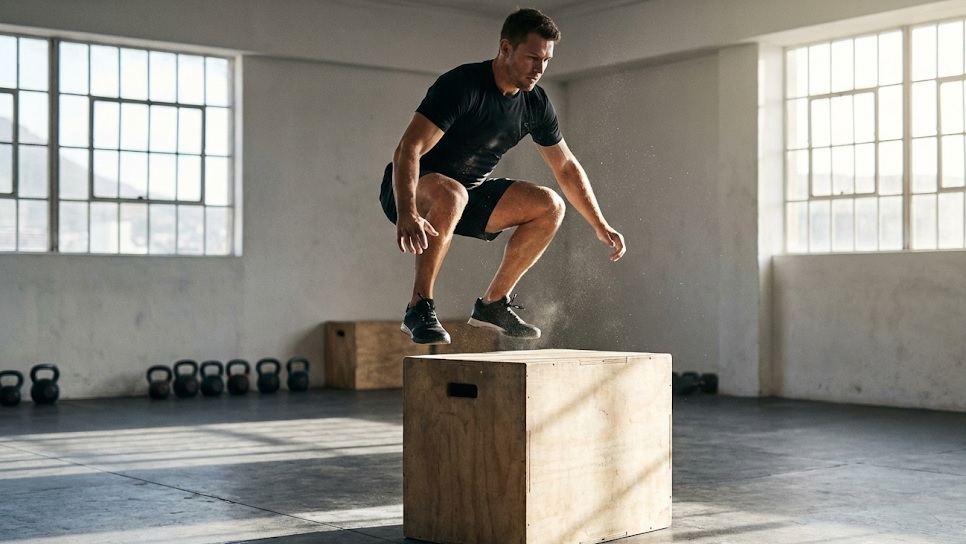
Plyometric exercise is the transition between power and speed. Such exercises as clapping push-ups, box jumps, and medicine ball slams teach your nervous system to use muscle fibers almost immediately.
Trick: Medicine ball slam is excellent as it develops the rotational force of a crushing left hook or spinning elbow.
The “Fast Start” Method
Explosiveness is concerned with getting to one hundred out of nowhere. One of the best exercises is to ask a partner to shout Go! at random intervals. When I say so, you will burst into action–sprints, a sprawl, a burpee, or even a jab-cross combo of full speed. These conditions are your explosive reactivity, which is a reflection of the anarchy of an encounter where you have to respond immediately to an opportunity.
Programming Created Especially for Hybrid Athletes
The greatest inhibitor for the hybrid athlete is not the exercises, but the time. You cannot just take a 5-day split of a bodybuilder and put it right over the two-a-day Muay Thai and hope you will survive. You must be strategic.
The general agreement among the leading strength coaches is that the optimal amount of strength sessions is two sessions a week for a combat athlete. This will enable you to exercise and work on strength without gaining fatigue that will impair your technical training.
An example of a weekly template is presented below:
- Monday: Light Muay Thai Skills and Technique.
- Tuesday: Hybrid Strength (Emphasis on explosive compound lifts, Deadlifts, or Front Squats) and then plyometrics.
- Wednesday: Intensive Conditioning and Muay Thai Sparring.
- Thursday: Skills and Technique (Pad Work) of Muay Thai.
- Friday: Power and Hypertrophy Workout (Concentrate on Pull-ups, Overhead Press, and accessory exercises, done explosively)
- Saturday: Muay Thai Sparring or Active Recovery Drills.
- Sunday: Rest Day
Important Hint: It is always necessary to focus on your skill work. When you have to decide whether you will do a heavy leg day or a hard sparring session, go with the sparring one. Put your strength workouts on the lighter days of the Muay Thai work, and you do not have to fry your central nervous system (CNS) doing the high-intensity work.
How to Hold Everything Together?
One of the traps that warriors should avoid when training to gain muscle is the lack of mobility, which causes the loss of a high range of motion. A hard hip flexor due to extreme squats will kill your teep (push kick). Close lats will be shortening your punches.
In order to avert this, mobility has to be one of the non-negotiable components of your training.
- Dynamic Stretching
Warming the joints before any workout, do the leg swings, hip circles, and arm circles to prepare the joints for a complete range of movement.
- Yoga or Dedicated Flexibility
Practicing yoga (at least 20 minutes daily) will enhance balance and posture, and in addition, ensure that your new muscles are not at the expense of your flexibility.
- Foam Rolling
The foam roller will be used to beat tight muscles and fascia, and will enable you to recover more quickly and have more movement.
It is not only possible to build a physique body and retain explosive speed on the Muay Thai ring, but it is also the signature of the modern martial artist. In selecting the appropriate workouts, training not to gain bulk, but to get power and speed, and thinking smart about your week-long plan, you can have the best of both worlds.
You can get into the ring, and you can look like you can break a tree in twain, and you can move like the wind. It is the strength of the hybrid athlete. Now get to the gym–both of them.
FAQ
Will weight lifting make me bulkier and slower for fight?
No, not if you train correctly. In order to remain explosive, emphasize the speed and purpose of lifting weights. Compound lifts such as squats and deadlifts should be used, and they should be accompanied by plyometrics. This trains fast-twitch muscle fibers, which are imperative in power and not the slow and thick mass that inhibits speed.
How much should we train for Muay Thai?
The most effective number of quality strength sessions per week for the majority of fighters is two. This will enable you to develop power and strength without exhausting yourself so much that you lose your technical skills training and sparring in the gym.
What are some of the best exercises for boosting strength?
The most useful exercises in clinch work are weighted chin-ups and pull-ups. They train the pulling power in your back, biceps, and forearms directly to deal with the neck and posture of an opponent and establish strong knees and sweeps.
Can squatting ruin your flexibility?
Not when you squat and put mobility first. Front squats should be used, since they help to have an upright torso and increase hip mobility. Never fail to complement your lifting with active warm-ups and special stretching, such as yoga, to retain the range of motion needed to have a high kick.
What is the right time to lift?
Do not forget to lift after your Muay Thai training, or even on a different day altogether. The central nervous system must be new, coordinated, and fast in skill work. Lifting first will result in poor technique, and you will incur a high risk of injury when doing pad work or sparring.
26
February 2026
Post By Admin
